User location management
Users can pin locations on a map or enter lat/lon; multiple locations can be stored and monitored.
NASA Space Apps Challenge 2024 — Global Winner (AsturExplorers)
Users can pin locations on a map or enter lat/lon; multiple locations can be stored and monitored.
Configurable lead time; notifications before overpass and when SR data becomes available for the selected location.
Fetch SR data once processed; filter by date range and cloud coverage; visualize key metadata; export-ready for reporting.
Support decisions by comparing satellite signals over time and correlating with ground measurements.
Track change over time (e.g., vegetation/land cover) and keep historical snapshots.
Monitor urban growth and green cover to inform sustainable development.
Explores whether environmental depth can be turned into signals the brain learns to interpret as spatial information.
Note: with headphones, the left/right audio separation is much clearer.
Here you can try the depth-to-audio simulator used in the study.
This project explores a sensory-substitution system aimed at mobility in blind children and people with severe visual impairment.
It starts from a simple yet profound premise: vision does not reside in the eyes alone, but in the brain, which interprets the information it receives through different pathways.
From that idea, the system translates environmental depth into auditory and vibrotactile patterns applied to the torso, including the abdominal area. The working hypothesis is that the brain can learn to interpret those stimuli as useful spatial information and, potentially, recruit networks associated with visual processing through sensory plasticity.
The ultimate goal is to contribute to the autonomy and everyday life of blind children through a research prototype designed to be comfortable, accessible, and relevant outside the laboratory.
The sections below present the technical, experimental, and social development of the project:
Early visual impairment is not just about “seeing less”. It affects basic mobility: finding obstacles, keeping direction, judging distances, and making quick decisions while moving.
For children and teenagers, this can be especially limiting. They’re still learning how the world is structured, but they don’t get the same visual feedback most of us take for granted. That often means reduced independence and a stronger need for constant support.
Traditional solutions like the white cane or guide dogs work very well, but they don’t provide a continuous spatial “picture” of the environment. Electronic aids exist too, but many are expensive, bulky, hard to maintain, or simply not designed to be worn comfortably every day.
So there’s still a practical gap: tools that are informative enough to improve autonomy, fast enough to be safe, comfortable enough to wear, and affordable enough to scale.
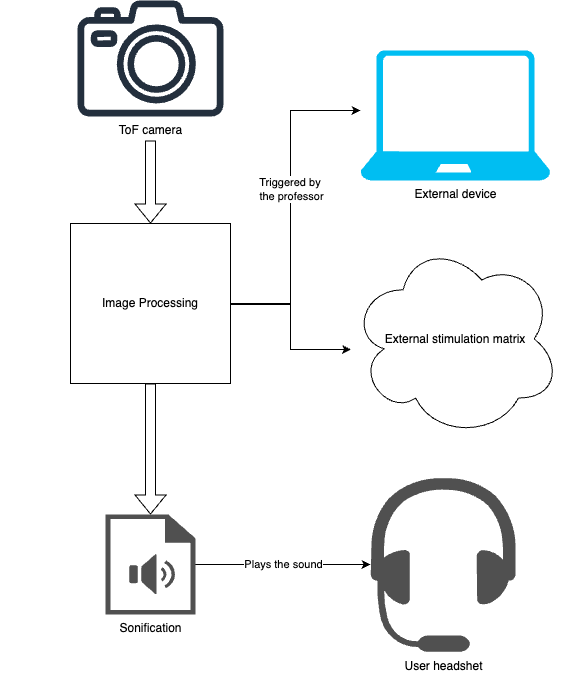
The system captures depth using a camera and converts that information into two feedback channels: sound and vibration. The goal is to provide a consistent representation of space — not in words, but as patterns the user can learn.
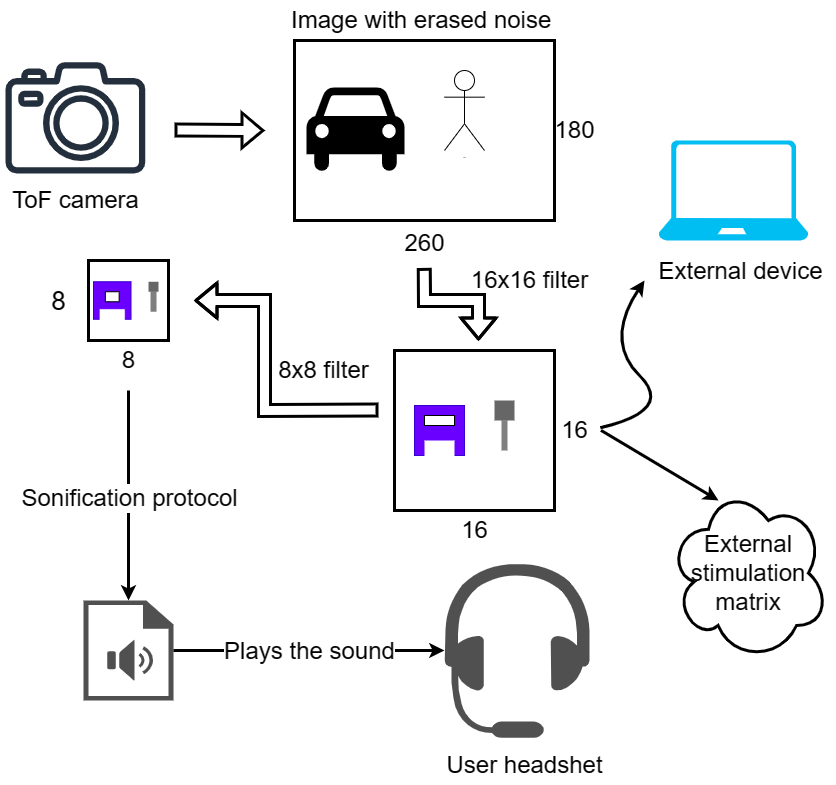
Conceptually, it’s straightforward: capture depth, filter it, reduce it to a compact form, then generate audio and tactile output in real time. The main requirement is coherence and low latency. If it feels delayed or inconsistent, it becomes confusing instead of helpful.
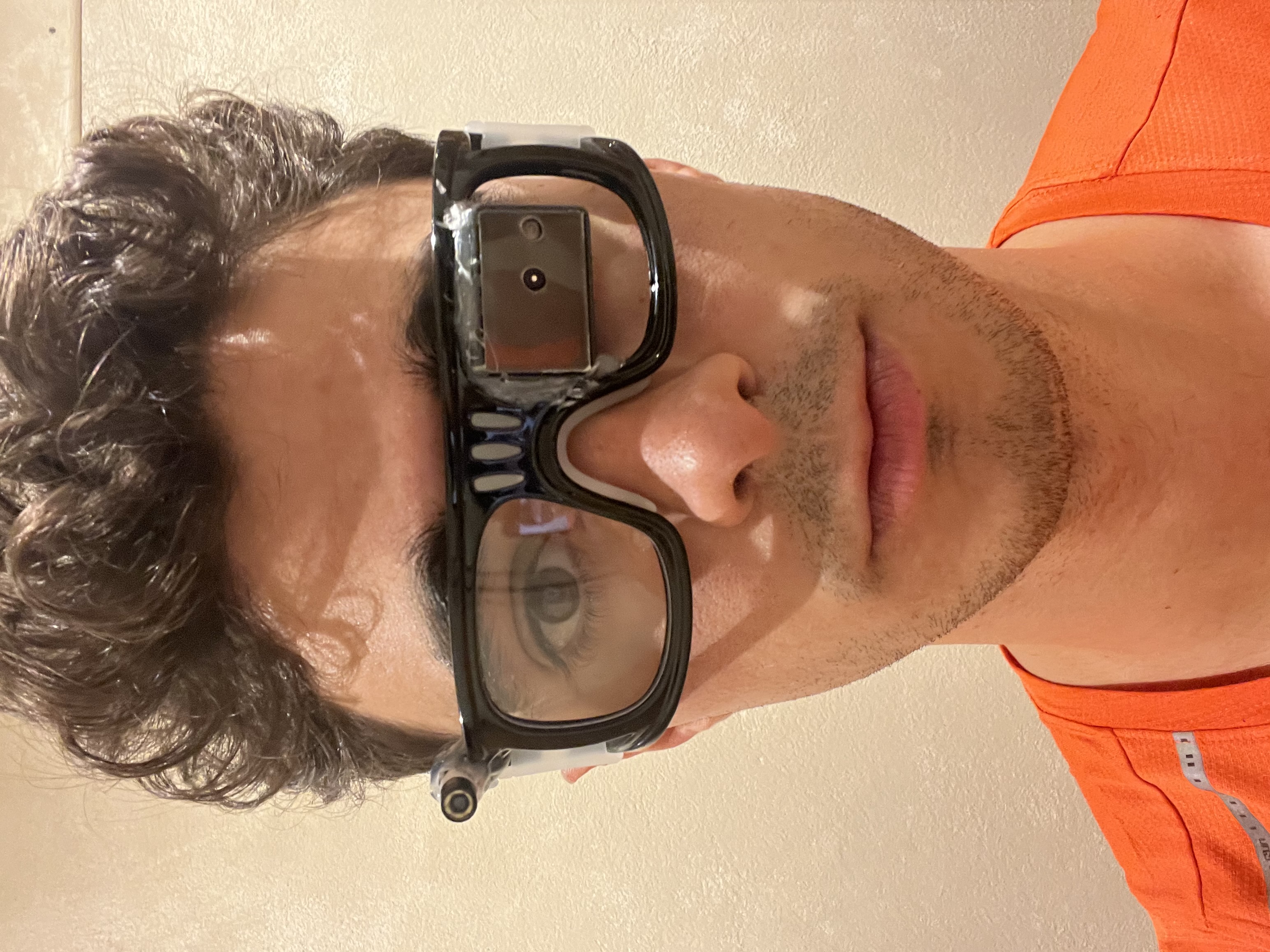
The physical setup is built around a pair of smart glasses. They act as the sensing point, carrying a Time-of-Flight (ToF) camera that measures distance in front of the user.
ToF cameras work by measuring how long light takes to return. In practice, they can provide a depth map at low latency, which is very useful for mobility — as long as you handle real-world noise properly.
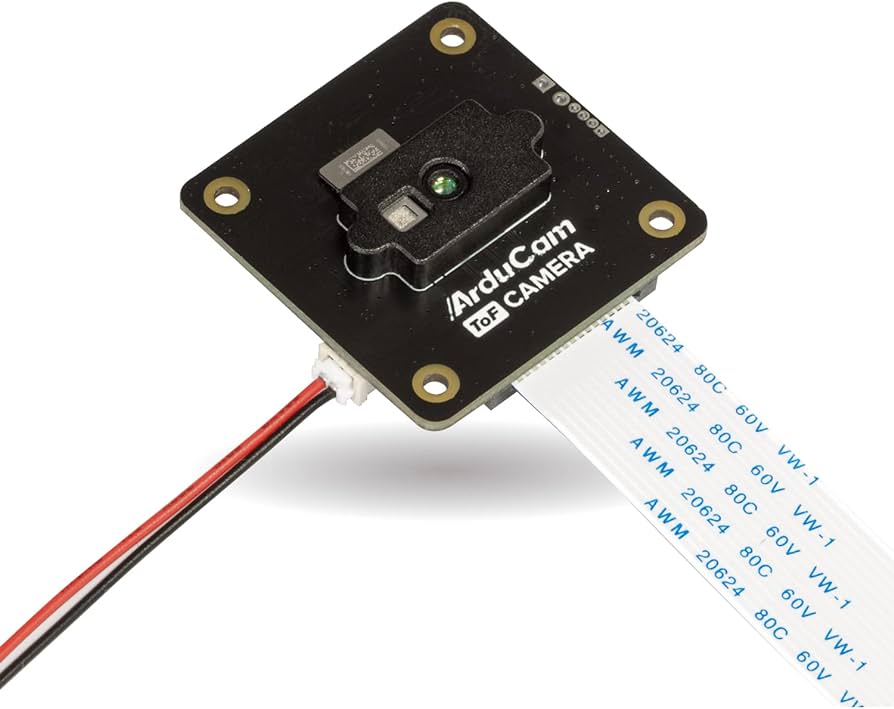
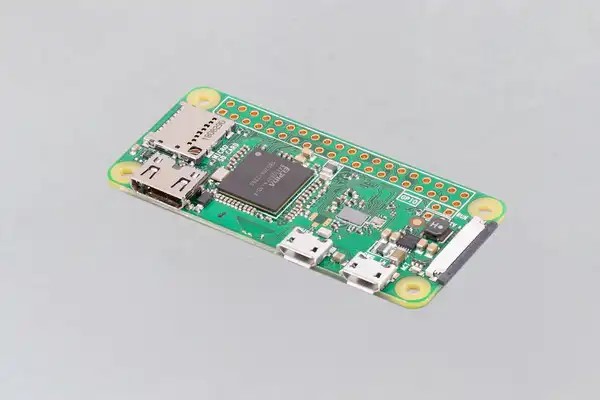
Processing is done on a single-board computer (SBC), and in some cases an AI accelerator can be added for tasks like object detection. Everything runs locally, offline — mainly to avoid cloud dependency and unpredictable latency.
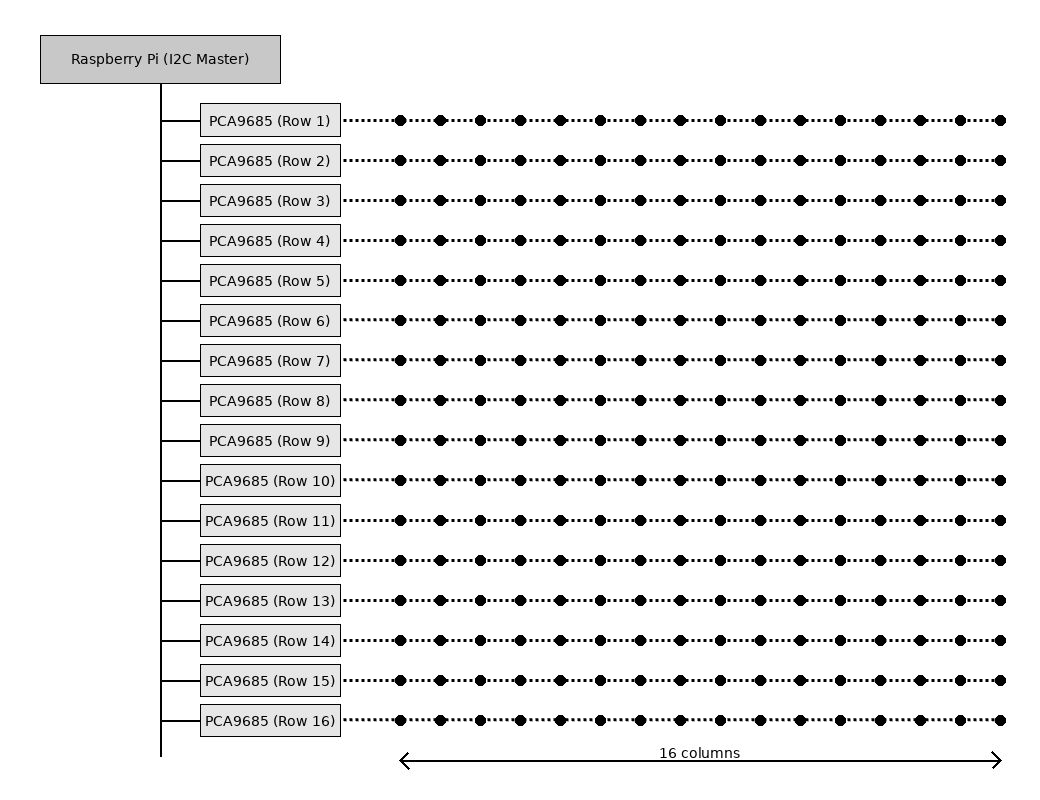
The rest of the system includes stereo audio output, a 16×16 tactile matrix, and an external battery. The design goal is not to be fancy — it’s to be practical, repairable, and not too heavy.
Early testing focused on whether the depth capture was stable enough under real conditions. Different ToF cameras were tried indoors and outdoors, and the behavior under sunlight and reflective surfaces was evaluated.
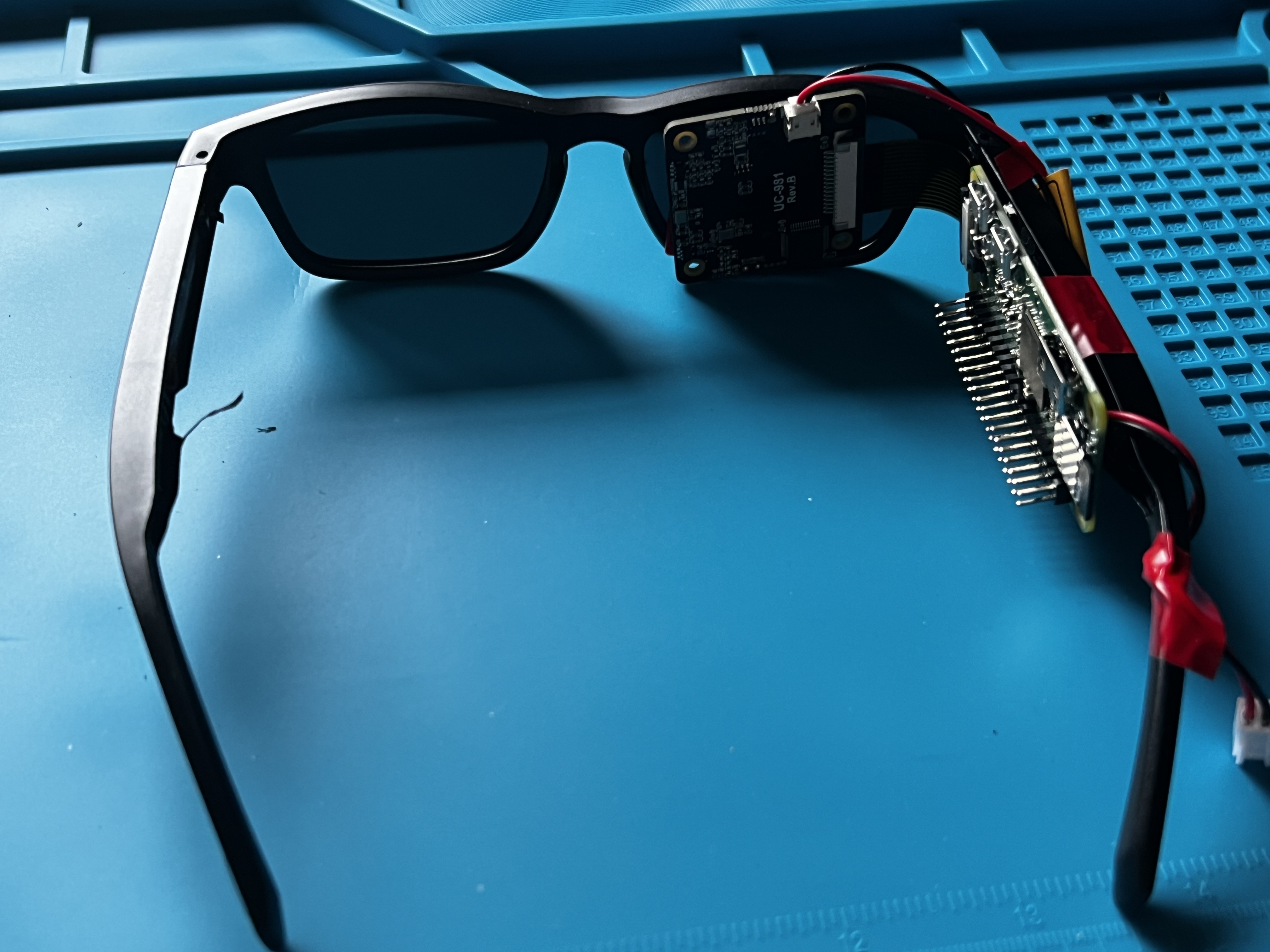
Noise, reflections, and bright outdoor conditions showed up quickly. Those limitations pushed the design toward stronger filtering and reduction steps before generating audio and vibration.

Canes, guide dogs, and electronic aids all help, but each comes with trade-offs. Some commercial devices focus on accuracy but become expensive or less wearable. Some research systems are interesting but not designed to be used daily. This project tries to stay in the middle: enough sensing and processing to be useful, while keeping the form factor and cost realistic.
Embedded computing is limited, and power is always a constraint. Better algorithms often mean more compute and less battery. Better mechanical protection often means more weight. Most design decisions are about balance.
Latency, robustness, and comfort are closely connected. Improving one can easily hurt another, so the system has to be tuned carefully.
If a system is useful but too expensive, it won’t create much real-world impact. From the start, one of the goals was to stay below 250 € per unit while keeping the core functions working reliably.
| Block | Role | Cost impact |
|---|---|---|
| ToF sensors | Depth capture | High |
| SBC + acceleration | Processing & logic | High |
| Audio & haptics | Feedback channels | Medium |
| Mechanical & 3D | Wearability | Medium |
| Power & cabling | Energy & interconnects | Low |
Below is a practical cost breakdown for the current prototype. These are small-scale, off-the-shelf prices — not a polished “product estimate”. It’s simply what it costs to build one working unit today.
| Component | Description | Approx. cost (€) |
|---|---|---|
| ToF depth camera | Real-time depth sensing (0–4 m) | 55 € |
| Single-board computer (SBC) | Main embedded processing unit | 15 € |
| AI accelerator (optional) | Object detection and inference support | 60 € |
| Audio system | Stereo output, DAC, cabling | 15 € |
| Tactile matrix (16×16) | Vibration motors + driver electronics | 55 € |
| Battery + power management | Swappable battery, regulation, protection | 20 € |
| 3D-printed parts | Glasses, supports, housings | 15 € |
| Cabling & connectors | USB-C, wiring, interconnects | 10 € |
| Total prototype cost | ≈ 245 € | |
Staying below 250 € is intentional. With scale, custom PCBs, and more optimized sourcing, this could be reduced, but the priority here was to keep the prototype functional and easy to replicate.
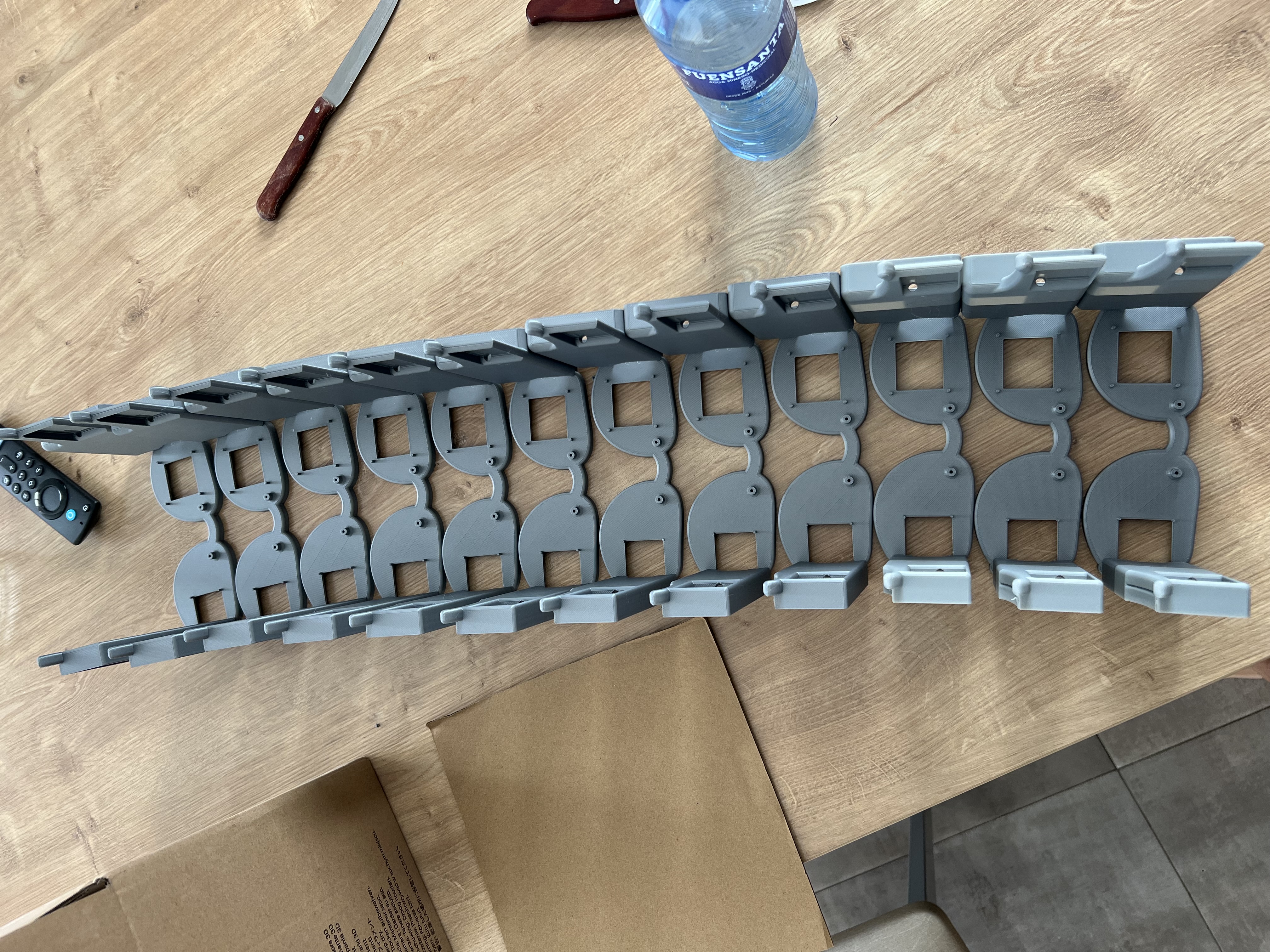
3D printing helped a lot during development. It made it possible to test different designs quickly and improve how the system sits on the face and how the components are protected.
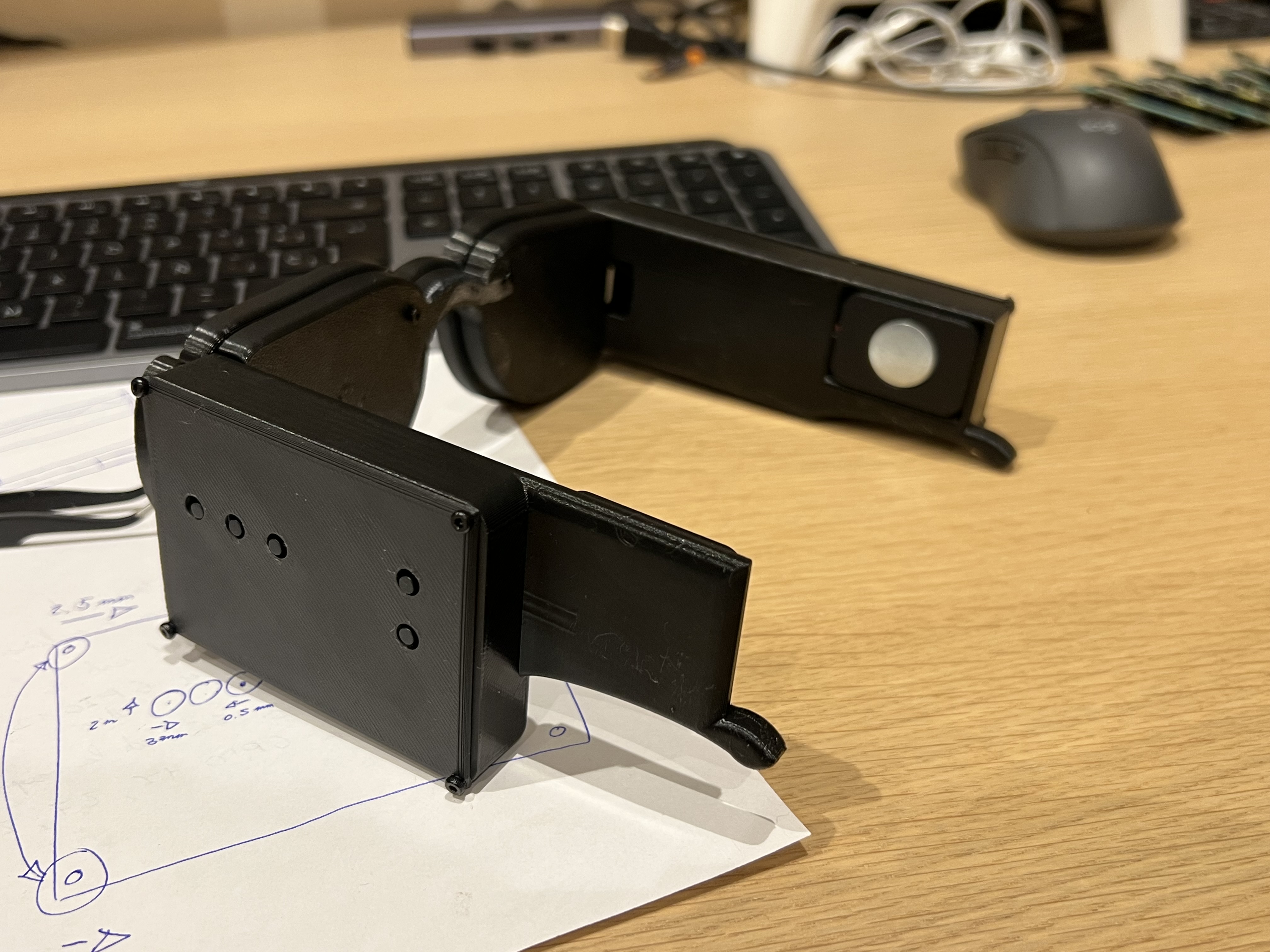
The tactile matrix also went through several versions, mainly to reduce pressure points and make it safer and more comfortable to wear for longer periods.
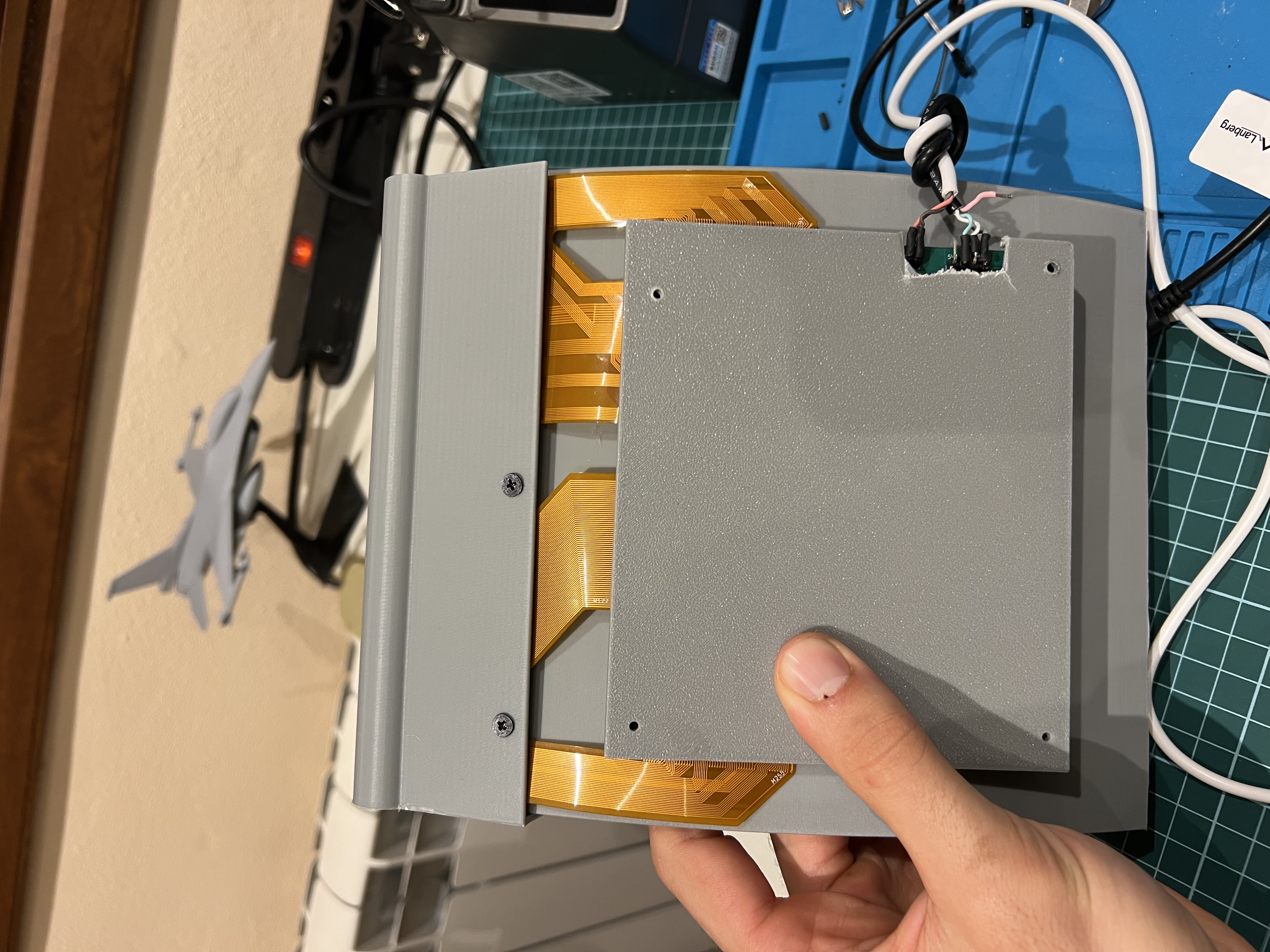
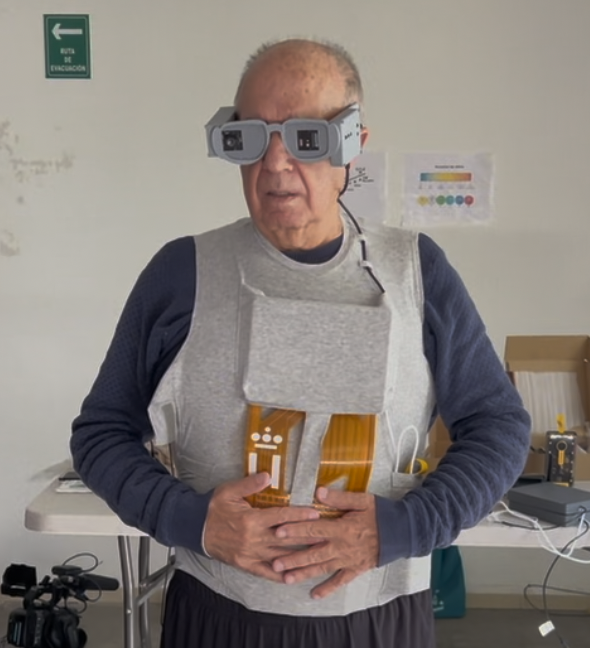
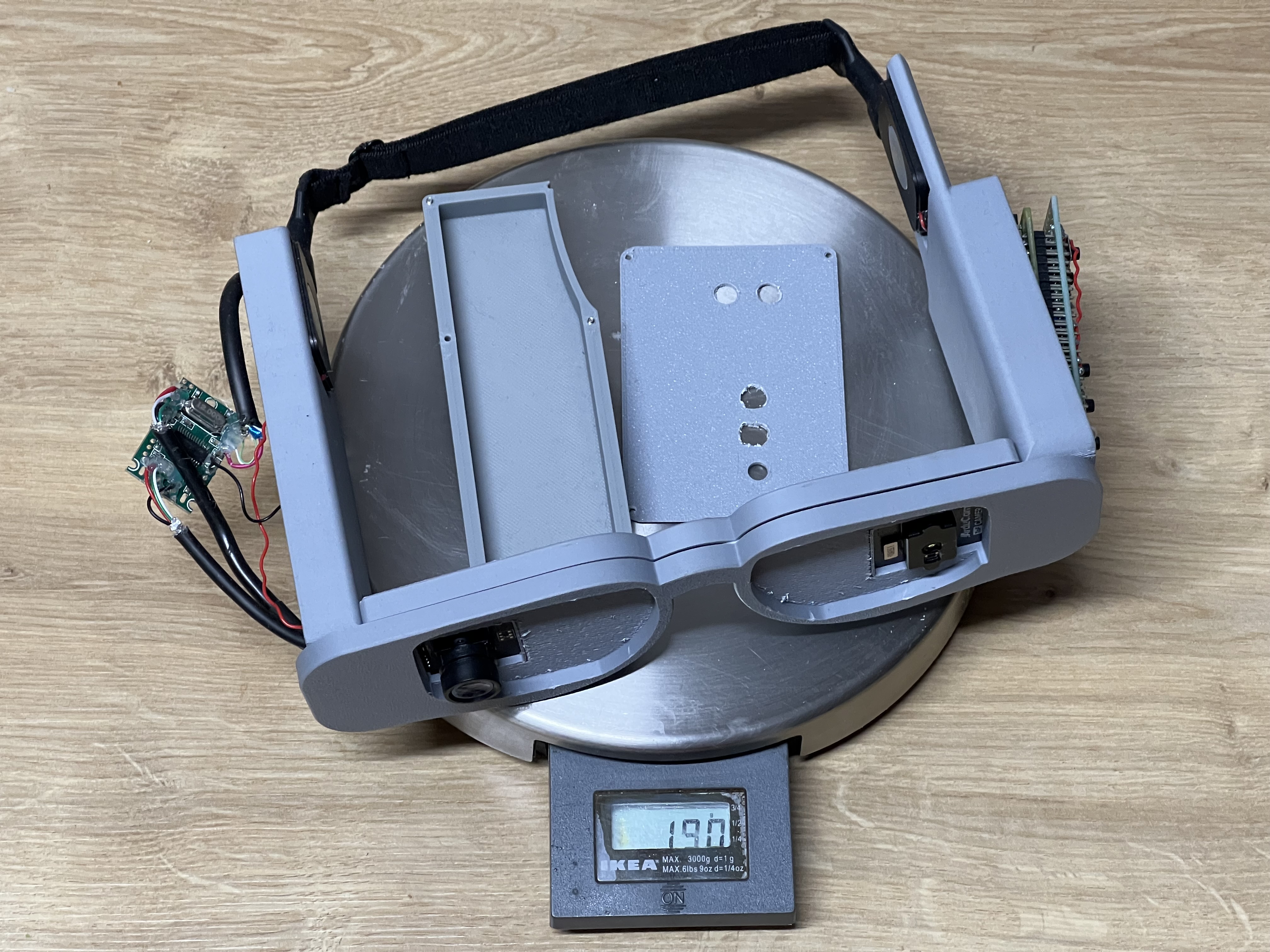
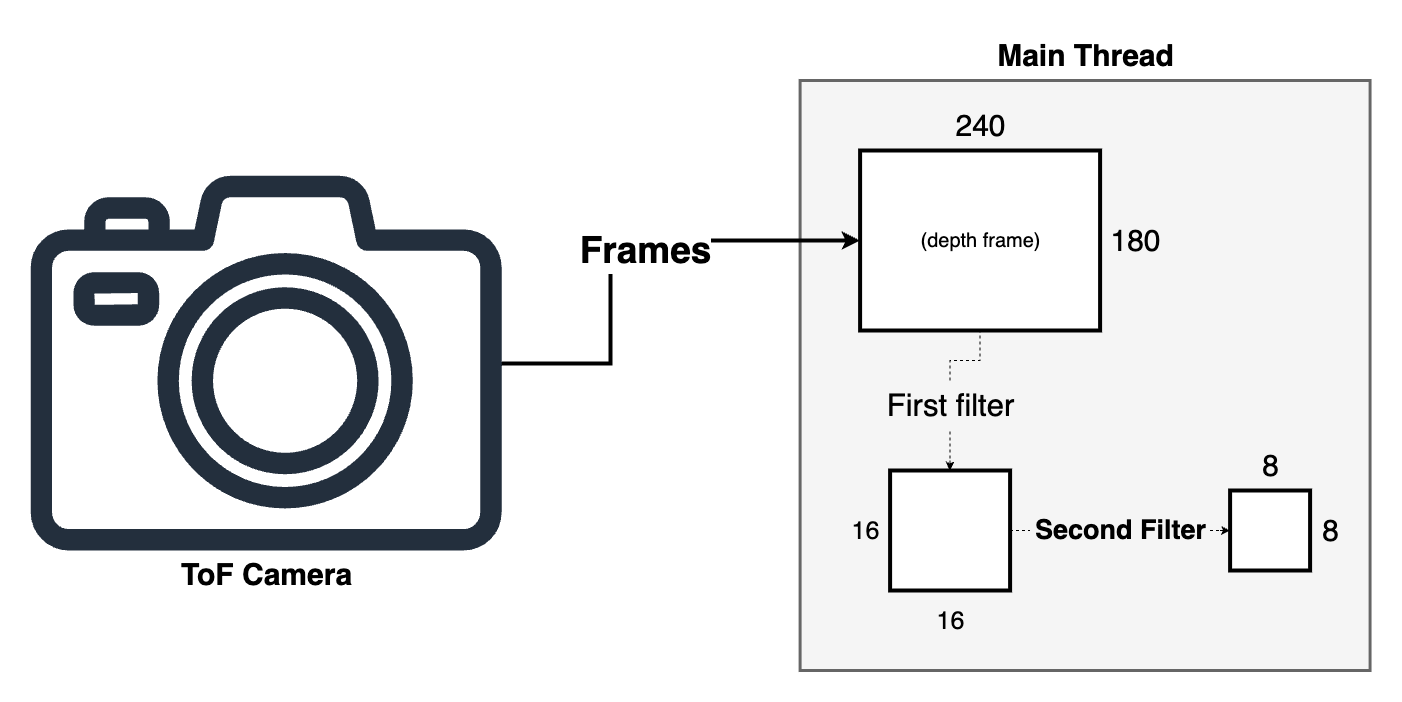
Raw depth images are too detailed to use directly. The system reduces the depth map into a 16×16 grid for haptics, and an even simpler representation for audio. The main goal is to keep the structure of the scene while staying fast.
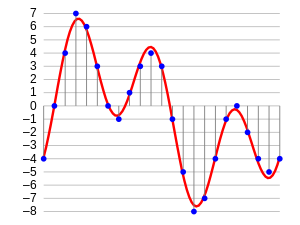
Sound encodes distance and position: volume and frequency represent depth and height, and stereo helps separate left and right. It’s not meant to be pleasant music — just consistent feedback that can be learned.
The vibration matrix is controlled over I2C with dedicated drivers. This allows synchronized patterns with low latency, and keeps sound and vibration aligned — which makes the feedback easier to interpret.
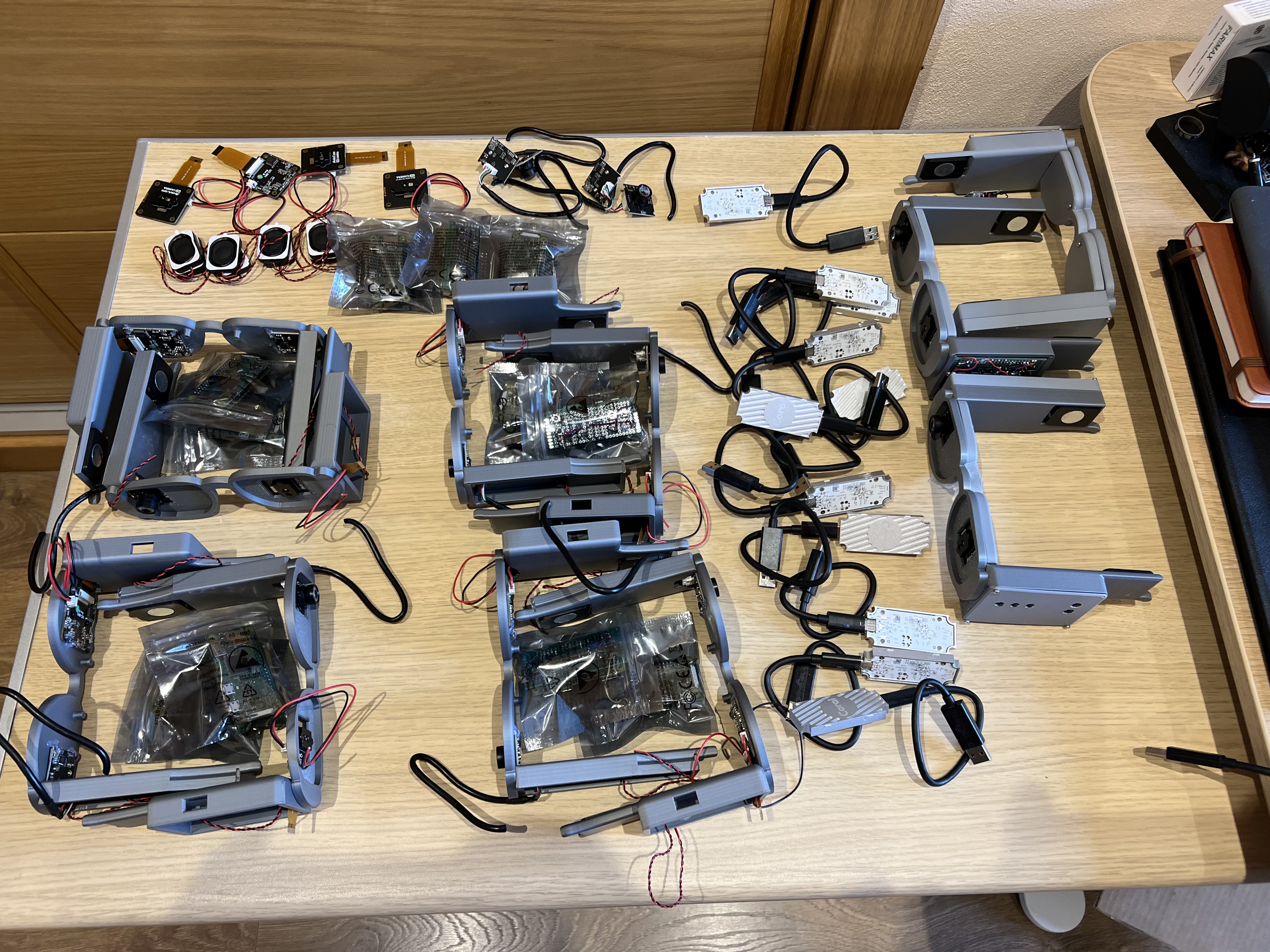
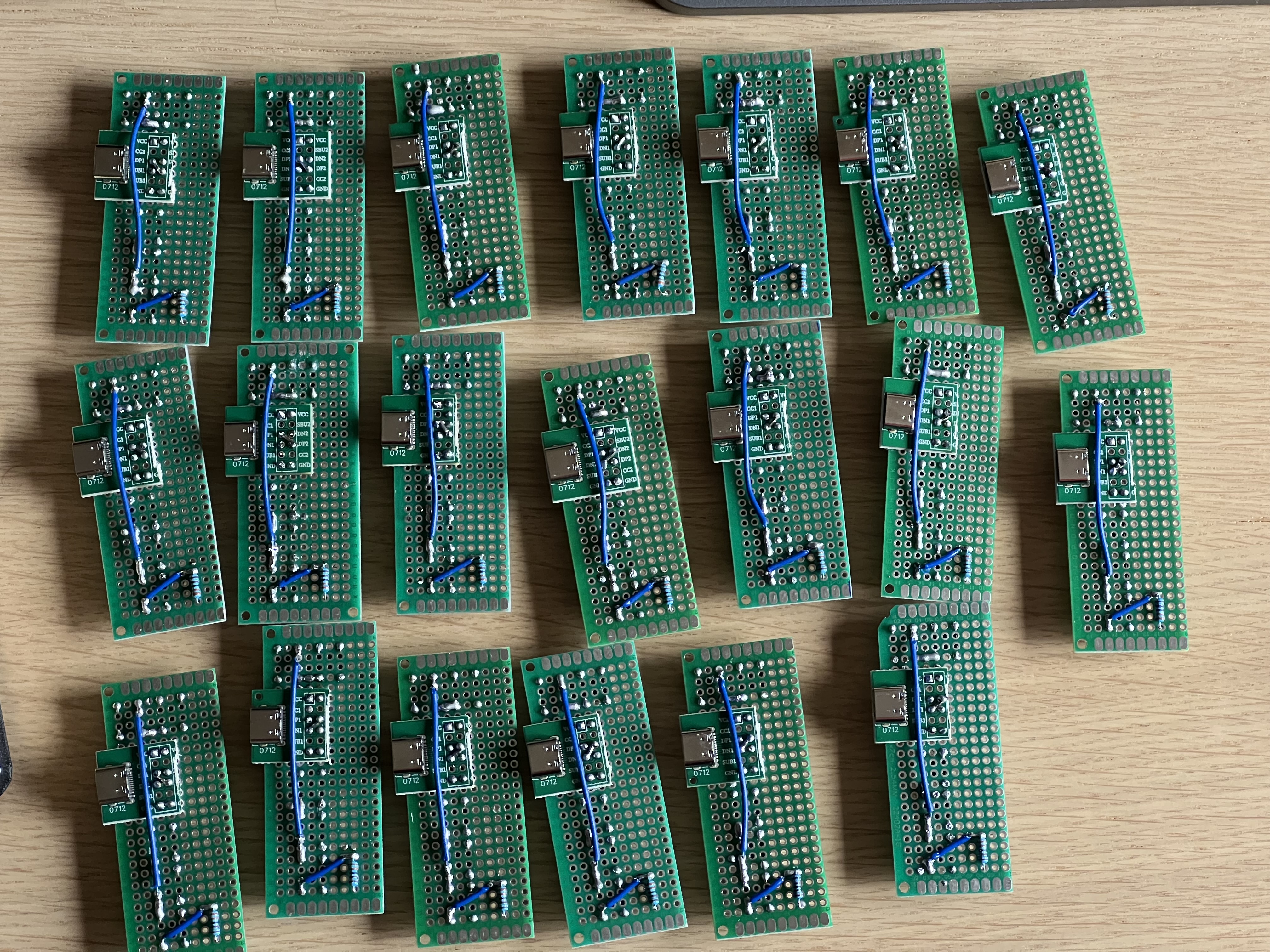
A batch of 17 devices was assembled for field trials in México, where the system was tested with children with congenital blindness. These photos show some of the hands-on work involved in building those units.
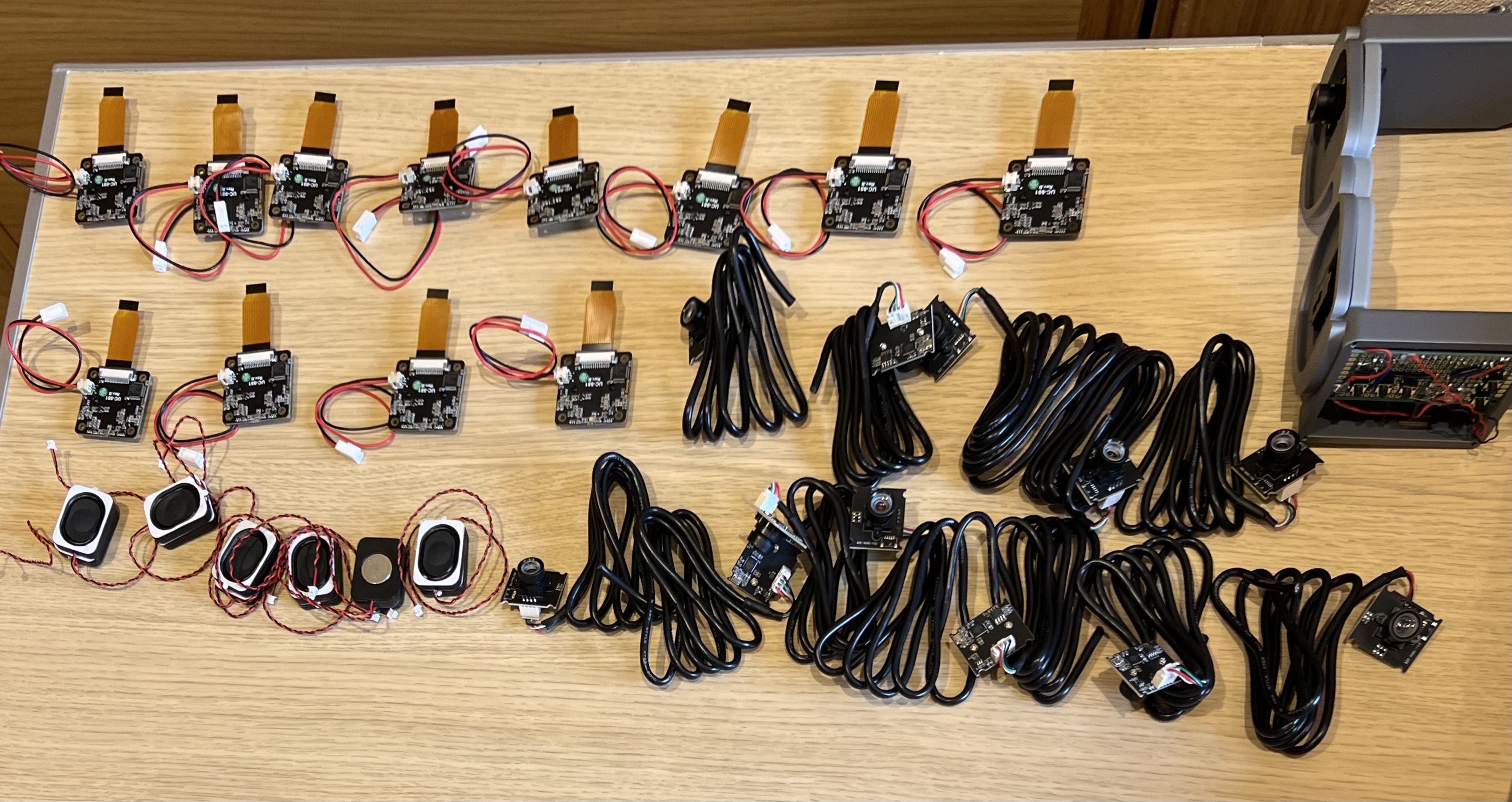
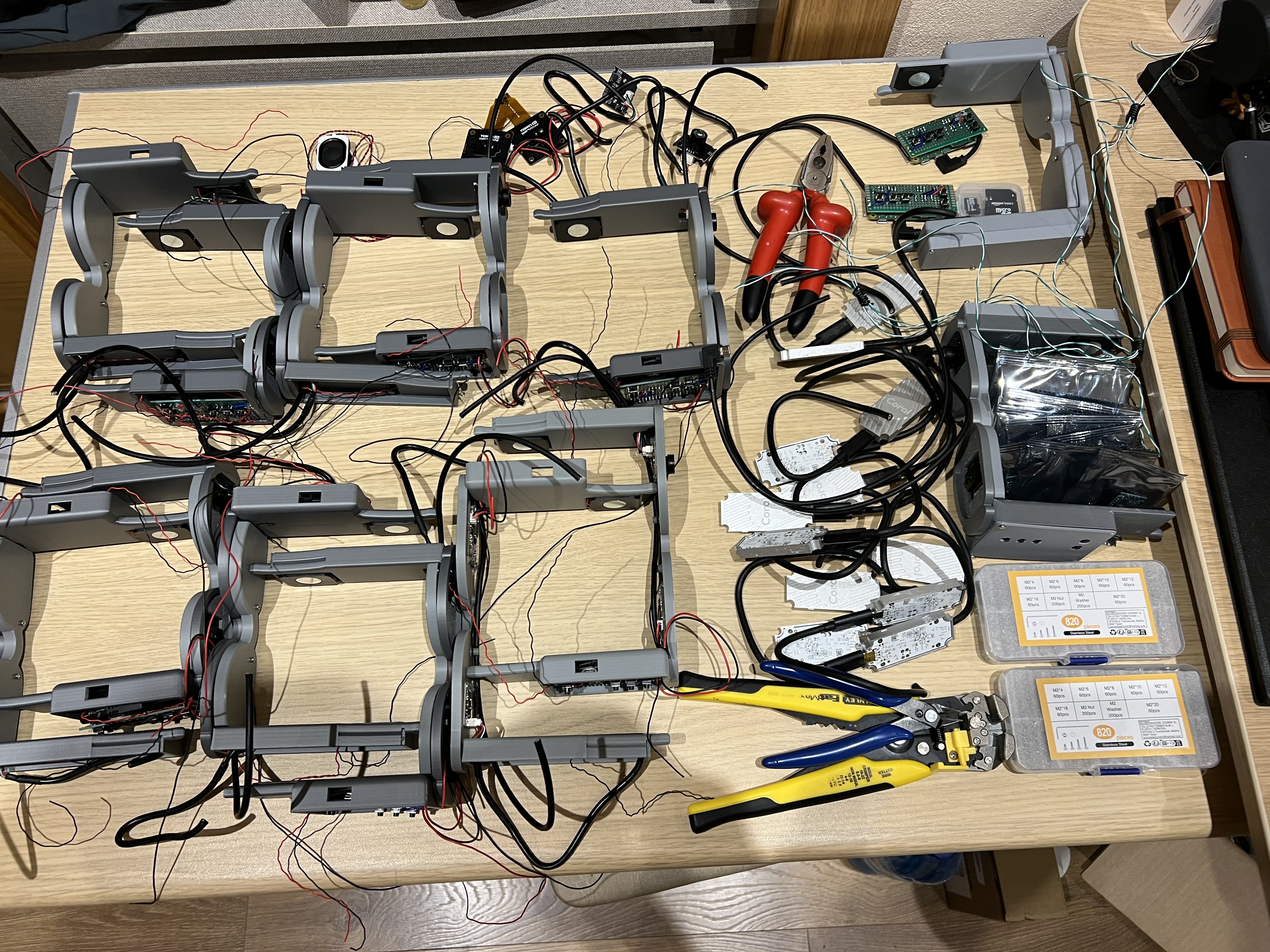
One clear direction for improvement is reducing weight and improving the everyday look. That’s why the next prototype moves toward lighter sport-style glasses — still experimental, but closer to something you could imagine wearing daily.